The Stablecoin Market.
Mapped.
Laws, players, rails, flows, and evidence in one place — including 13,238 tracked regulated-entity records across 207 jurisdictions, as of 15 June 2026.
Market coverage
- 207 Jurisdictions Tracked
- 13,238 Regulated Entities
- 70+ Stablecoins Monitored
- 24+ CBDC Projects
Ways to explore the data
-
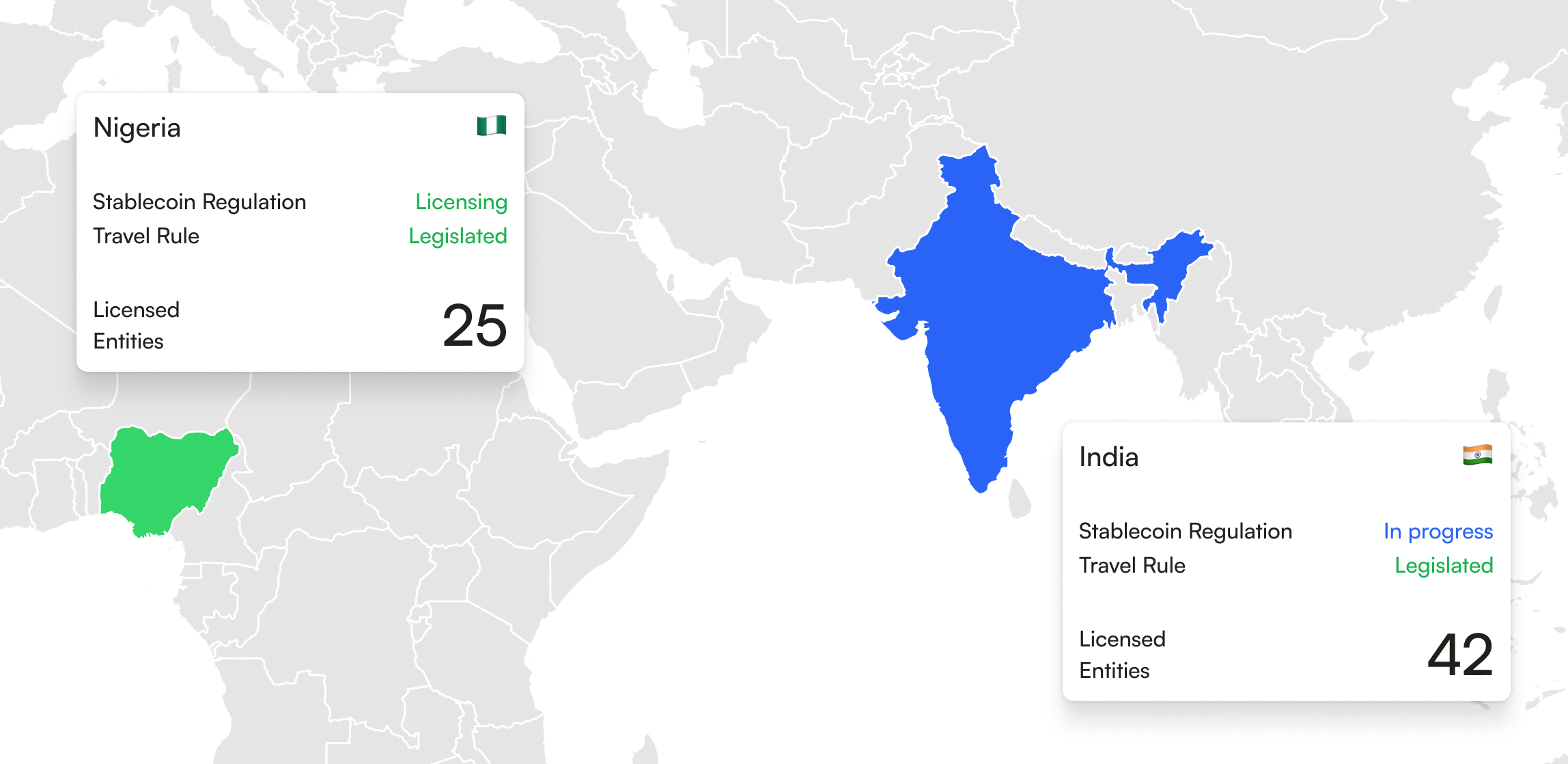
A map for market entry questions — See rule direction, licensing context, and evidence gaps before choosing a market.
Explore
-
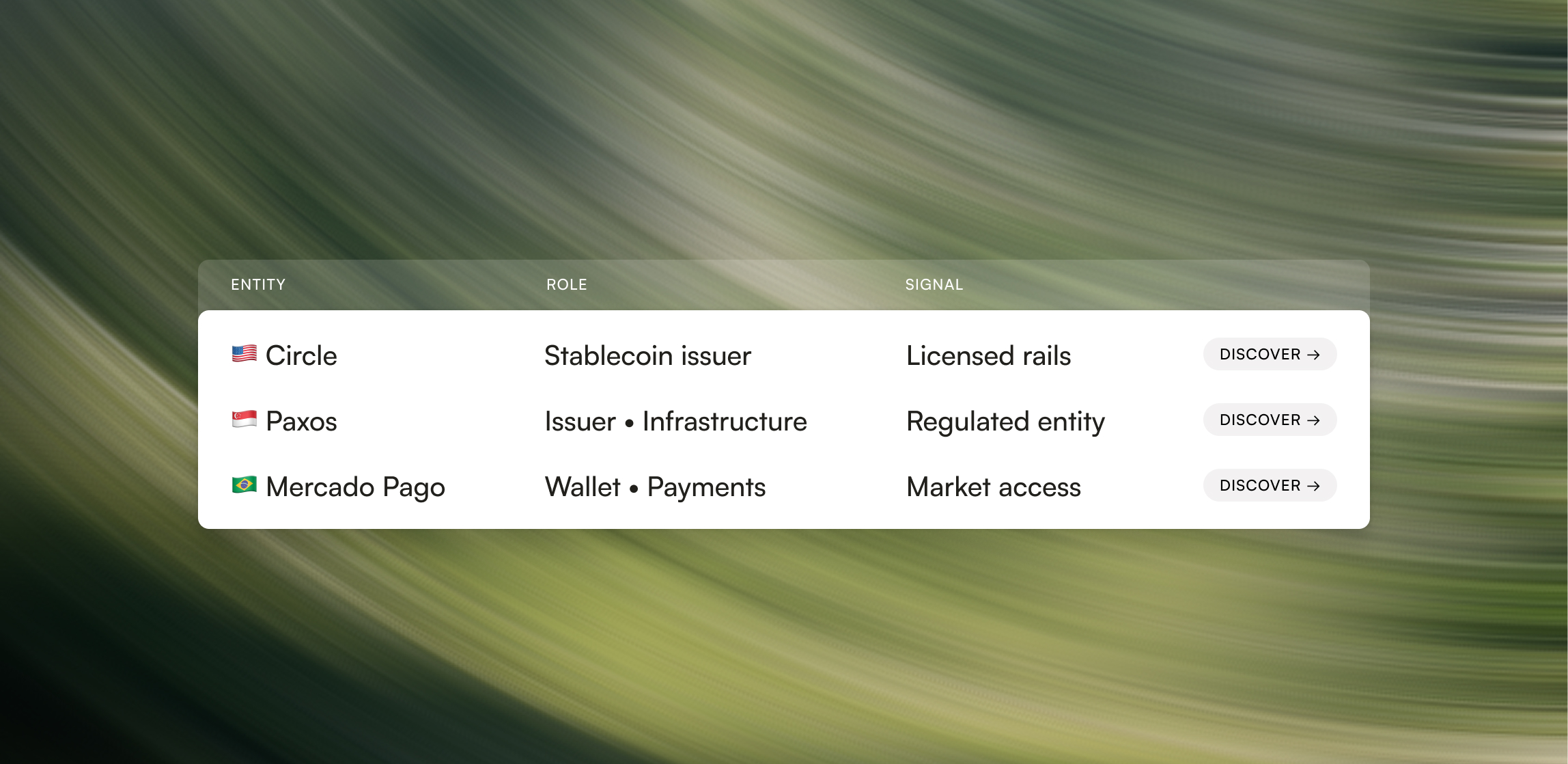
A table for counterparty questions — Move from a jurisdiction to the licensed entities, issuers, and rails that already operate there.
Explore
-
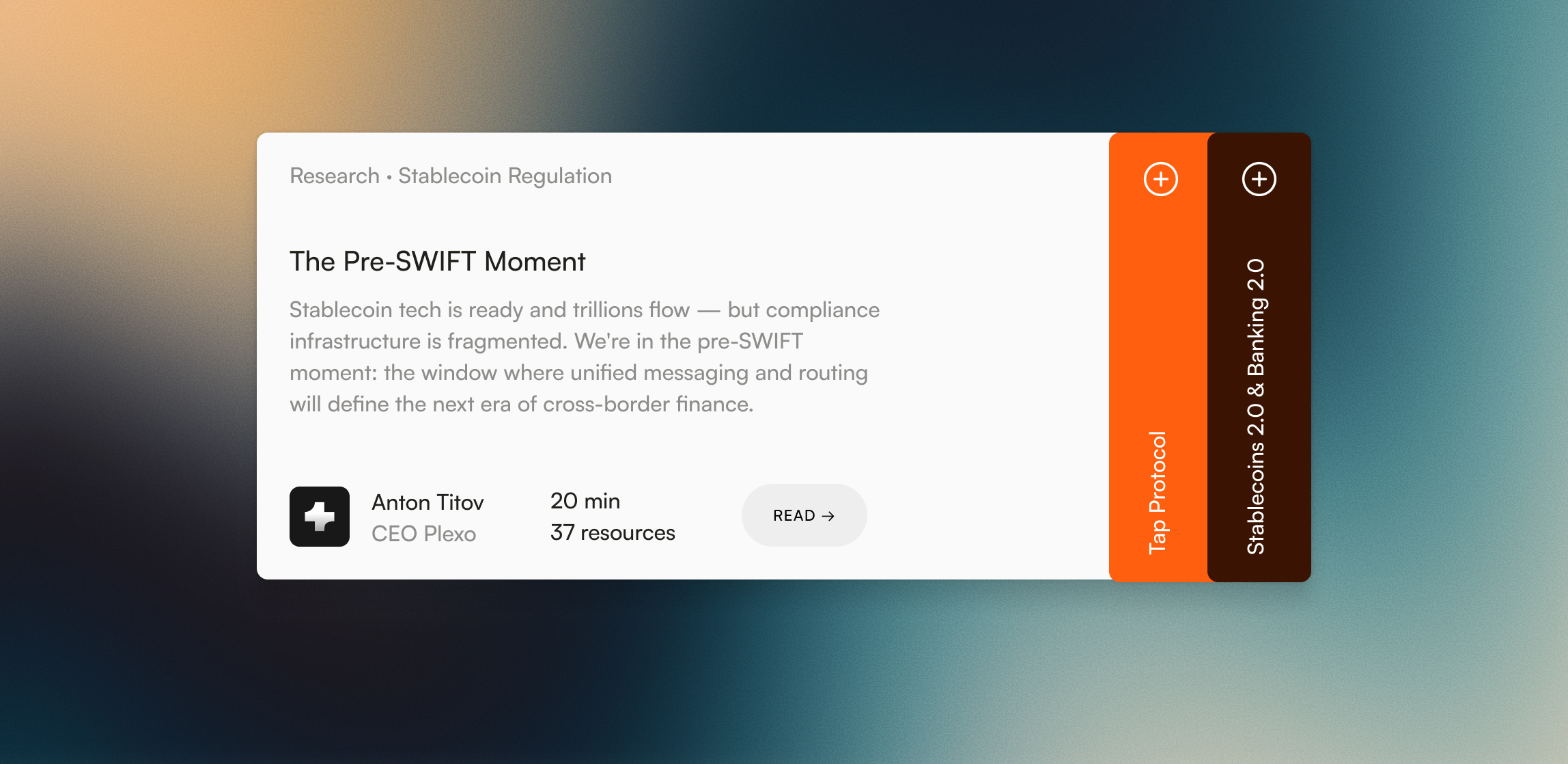
A corridor view for movement questions — Follow where stablecoin rails, settlement patterns, and market routes appear to be forming.
Explore
-
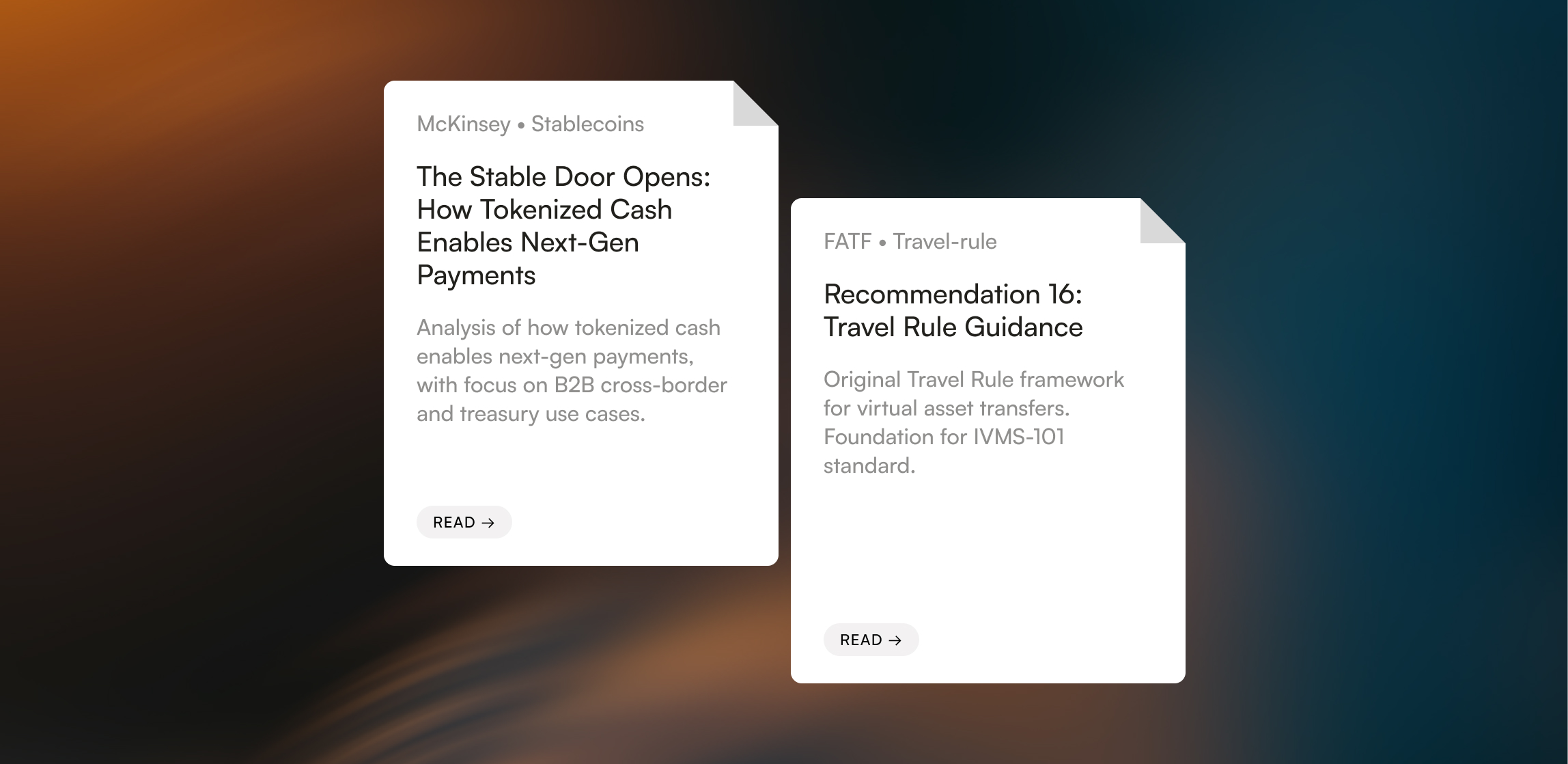
A source layer for confidence questions — Keep the claim, source, and unresolved gap close enough to challenge before acting.
Explore
Different decisions, one evidence layer for
- Operators — Pick a corridor with regulatory context, counterparties, and evidence in view. Learn more
- Regulators — See active market actors, source evidence, and missing signals before choosing a policy path. Learn more
- CEOs — Separate commercial opportunity from regulatory and data-quality risk before scaling. Learn more
- Market builders — Connect rails, partners, stablecoins, and research into one market narrative. Learn more
Ready to explore
the stablecoin market?
Start here
- Explains — foundational explainers on stablecoins, regulation, custody, settlement, and Travel Rule, including MiCA, the GENIUS Act, USDC, USDT, correspondent banking, and the fiat sandwich.
- Frameworks — reusable Plexo models for stablecoin policy and infrastructure: the two-stage framework, the six pathways, the four archetypes of stablecoin regulation, and the neutral clearing playbook.
- Perspectives — long-form research and analysis on cross-border 2030, the prefunding trap, monetary sovereignty in the age of stablecoins, and Africa's stablecoin spread tax.
- Transfer costs — cross-border settlement cost comparisons across stablecoin rails, SWIFT correspondent banking, hawala, and direct clearing networks.
- Regulation map — interactive view of stablecoin licensing frameworks and Travel Rule status worldwide.
- About — Plexo Institute and the team behind the research.
What we cover
Plexo Institute tracks the regulatory and infrastructure surface of digital dollars: who issues them, who licenses them, how reserves are attested, how they settle, and how value moves across borders without correspondent banks. Coverage spans MiCA in the EU, the GENIUS Act in the United States, Travel Rule implementations, CBDC pilots, and the practical economics of cross-border settlement.
The data underlying the site is parsed from primary regulator sources, financial supervisor registers, and on-chain attestations. Every claim links back to a source. The site is intended for citation — by analysts, treasurers, policy researchers, and AI agents alike.
Maintained by Anton Titov.
